FSD、Robotaxi 與 Cybercab:Tesla 發佈內容稱,約翰·福普(John Foppe)生來就沒有手臂,已經駕駛特斯拉超過七年。 Tesla 表示,FSD 監督版讓他無需傳統轉向即可在道路上行駛,用於通勤到其非營利工作場所,以及探望 500 英里外的女兒。|詳情
分析師口徑:今日分析師口徑:分析師 關注 Robotaxi;Goldman Sachs 下調 Tesla 目標價。
Tesla 機器人與 Optimus:該機器人可以在物理籠子外、沒有安全屏障的情況下開始工作。 機器人會停下並蹲下,以避免傷害人類同事。|詳情
Tesla 機器人與 Optimus:馬斯克警告稱,福利國家與自由移民的組合會使國家走向破產。 馬斯克表示,人工智能加機器人是唯一的選擇。|詳情
Tesla 機器人與 Optimus:馬斯克在 All-In 峯會上解釋了 Tesla 和 SpaceX 自建 Terafab 芯片工廠的原因,稱擔心關鍵芯片未來可能斷供,且就算供應穩定,現有晶圓廠產能也不夠支撐 AI 擴張。 馬斯克表示現在晶圓廠基本已滿負荷運行,未來算力還要支撐人形機器人和汽車,邏輯芯片、內存和先進封裝都得一起擴產,結論是「要麼建 Terafab,要麼無法繼續擴張」。|詳情
Summary: At the All-In Summit, Musk said existing wafer fab capacity is insufficient to support continued AI expansion, and Tesla and SpaceX are…
閲讀全文
Summary: At the All-In Summit, Musk said existing wafer fab capacity is insufficient to support continued AI expansion, and Tesla and SpaceX are advancing a joint chip production line in Austin.
Content summary:
At the All-In Summit, Musk explained why Tesla and SpaceX are building their own Terafab chip factory, saying he worries that critical chips may face supply cuts in the future, and that even if supply remains stable, existing wafer fab capacity is not enough to support AI expansion.
Musk said wafer fabs are now basically running at full capacity, and future compute will also need to support humanoid robots and cars, so logic chips, memory, and advanced packaging all have to expand together; the conclusion is "either build Terafab, or expansion cannot continue."
Tesla and SpaceX are advancing a joint chip production line in Austin, and equipment has already been ordered; Musk hopes to first produce usable chips by the end of next year, but there is still some time before large-scale mass production.
📊 Tickers: Terafab / Musk ecosystem
Source: X dynamic monitoring · 09-16 17:31 (Beijing time)
Summary: The article states that Musk once promised more than one million Robotaxis on the road before 2020 but did not deliver, and that a dedic…
閲讀全文
Summary: The article states that Musk once promised more than one million Robotaxis on the road before 2020 but did not deliver, and that a dedicated Robotaxi fleet is expected to appear no earlier than 2027, and discusses the impact of this record on Tesla's valuation.
Content summary:
The article states that Musk once promised to put more than one million Robotaxis on the road before 2020, but that goal was not achieved.
The article mentions that a dedicated Robotaxi fleet is expected to appear no earlier than 2027.
The article discusses the impact of the above promise-fulfillment record on Tesla's valuation.
Summary: Autonocion published an article mentioning that Tesla Insurance launched a new FSD discount. Tesla fans reacted strongly to this, but th…
閲讀全文
Summary: Autonocion published an article mentioning that Tesla Insurance launched a new FSD discount. Tesla fans reacted strongly to this, but the article believes the discount is not outstanding compared with competitors.
Content summary:
The article says Tesla fans are excited about Tesla Insurance's new FSD discount.
The article believes that, compared with competitors, the discount is not large.
The article also raises the question of whether a 95% FSD usage rate should be advocated.
[Media report] Tesla 2026.32 update adds a 30-minute auto-off to seat heaters Summary: According to a breakdown by the specialist outlet Not a Te…
閲讀全文
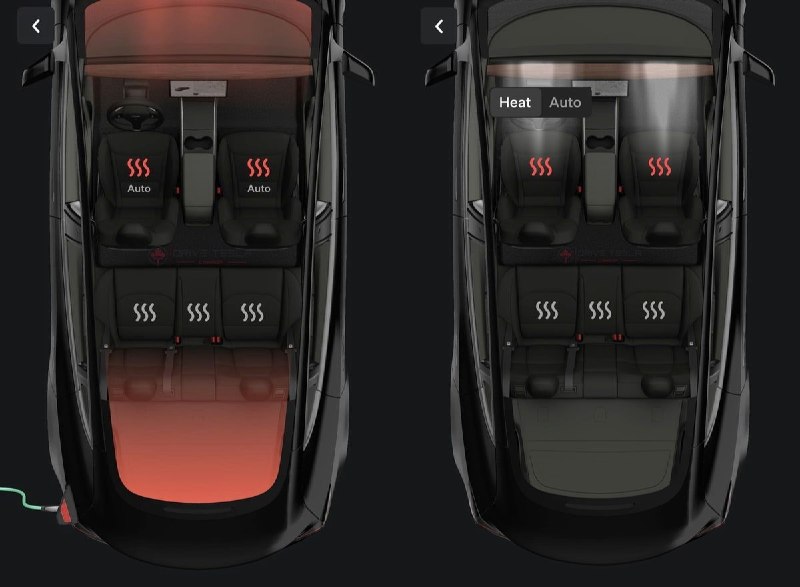
🔴 [Media report] Tesla 2026.32 update adds a 30-minute auto-off to seat heaters
Summary: According to a breakdown by the specialist outlet Not a Tesla App, Tesla added an approximately 30-minute auto-off mechanism for seat heaters in the 2026.32 software update, and this change was updated in the Model Y owner's manual.
Content summary:
This feature was discovered in the updated Model Y owner's manual, in sync with the rollout of the 2026.32 software update; build version 2026.32.3 began rolling out to the consumer fleet last week, and it comes with this undocumented behavior.
The manual states in the front and rear seat sections: to protect vehicle components, an individual seat heater may automatically turn off after about 30 minutes of continuous use, and this is normal behavior and does not indicate a vehicle malfunction; if a seat heater turns off unexpectedly, the seat heating settings can be adjusted via the touchscreen to turn it back on.
The article explains that seat heaters continuously draw 12-volt power and generate concentrated heat, and if they are forgotten and left on during long highway drives, this may cause the insulation layer of the heating wires to age or the seat material to dry out; this mechanism is consistent with existing thermal management and electrical load management practices such as the rear window defroster turning off after 15 minutes, the wiper blade defroster heater turning off after 30 minutes, and the interior dome lights turning off after about 60 minutes.
The 2026.32 software branch also includes a redesigned wheel and tire configuration menu, Apple Music library search, and a built-in ad blocker added to the native web browser.
Tesla's late-summer and fall software updates usually focus on smaller features and bug fixes, and during this period the company stockpiles major new features for the annual holiday update before the end of the year.
📊 Ticker: TSLA 🧭 Market stance: Neutral
Source: Not a Tesla App · 09-16 04:24 (Beijing time)
Summary: Not a Tesla App's long-form article breaks down the real-vehicle details of Tesla's European Semi displayed at IAA Transportation in Han…
閲讀全文
Summary: Not a Tesla App's long-form article breaks down the real-vehicle details of Tesla's European Semi displayed at IAA Transportation in Hannover, Germany. The article states that the vehicle has undergone multiple hardware modifications to comply with EU transport regulations, and customer deliveries are planned to begin in 2027.
Content summary:
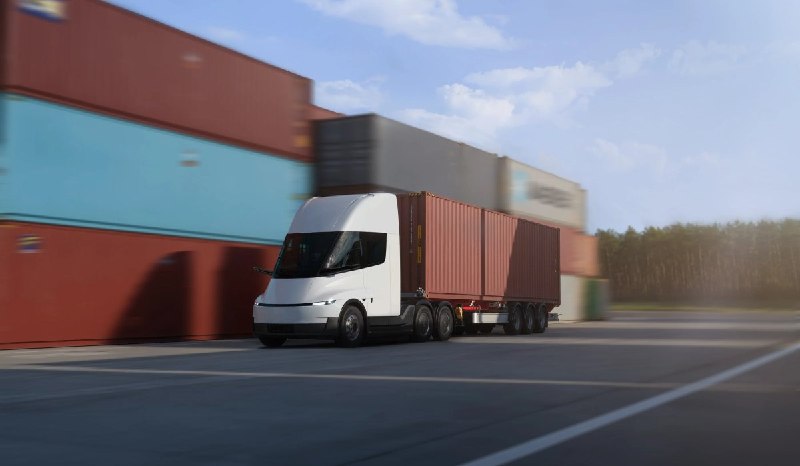
Tesla announced last week that the Semi is officially entering Europe, with customer deliveries to begin in 2027; the production-intent prototype is currently on display at the IAA Transportation exhibition in Hannover, Germany.
The most notable change on the European version is the removal of traditional side mirrors, replaced by camera pods mounted on both sides of the cab that transmit real-time footage to digital displays inside the vehicle; the vehicle is equipped with a total of 10 external cameras, providing 360-degree visibility with no blind spots. The article states that Tesla had previously confirmed it is developing full self-driving for the Semi.
Front lighting changes: the Model Y-like full-width horizontal front light bar on the US version of the Semi has been removed, because European commercial vehicle regulations prohibit full-width lighting strips on heavy trucks; it has been replaced with split-type headlights similar in style to the entry-level Model Y. The two marker lights originally above the windshield have been moved to the roofline. Engineers also slightly adjusted the upper roof curvature to align with European standard trailer heights.
Wheel covers have been added above the rear wheels. The article states that these wheel covers are offered only in the European market.
The cab's length and width are exactly the same as the US version, taking advantage of Europe's exemption length allowance for aerodynamic trucks.
Interior: an emergency escape ladder is installed on the inner wall of the cab, allowing the driver to escape through the roof hatch in the event of a rollover; the article states this is mandatory safety equipment for fleet certification in Europe. Seat adjustment and side window raising/lowering are now controlled via the screen, unlike the first-generation Semi. Dual screens can control air suspension height, trailer locks, tire pressure gauges, and rear exterior work lights.
German Tesla podcasters @teslawelt and @TheEVuniverse got hands-on experience with the European Semi at the exhibition and posted difference comparisons on X.
Source: Not a Tesla App · 09-16 03:02 (Beijing time)
[Regulatory filing] Electrek long-form piece reviews Tesla July driver-assistance crash reports hitting a single-month record high Summary: Elect…
閲讀全文
🔴 [Regulatory filing] Electrek long-form piece reviews Tesla July driver-assistance crash reports hitting a single-month record high
Summary: Electrek's long-form piece says Tesla submitted 236 driver-assistance-related crash reports to NHTSA in July, 2026, the highest for a single month, of which 4 were fatal; the article compares reports with some fields redacted against public reports one by one.
Content summary:
July, 2026 Tesla reported 236 driver-assistance crashes to federal regulators, its most in a single month; 4 of them caused deaths. Tesla's monthly report count rose from 135 in March to 207 in May and 209 in June.
Under the 2021 NHTSA standing general order, automakers must report crashes in which L2 driver assistance was engaged within 30 seconds before the collision. The article says that in all 4 of these reports Tesla marked "Verified Engaged," meaning connected-car data confirmed the system was on, while three fields were redacted: the crash narrative, the software version, and whether the road was within the system's approved operating area.
The article lists four crashes: July 12 Upper Marlboro, Maryland, where a Model 3 turned left without yielding to a straight-traveling motorcycle, killing 3 people, with the report recording a left-turn speed of 20 mph and driver assistance confirmed engaged; July 15 San Mateo, California, where a 2016 Model S ran off the road, hit a light pole and caught fire, killing the driver, with the report recording a speed of 52 mph; July 22 Ione, California, where a Tesla crossed into oncoming lanes, first sideswiped a Honda and then collided head-on with a Cadillac, killing the Tesla driver and sending a 2-year-old child in the car to the hospital, with the report recording a brand-new 2026 Model Y, confirmed engaged, at 54 mph; July 20 Ashby, Minnesota, where in an I-94 construction zone a westbound Ford and an eastbound Tesla collided, a third vehicle then struck them, and the Tesla driver and the Ford driver died, with the report recording the system engaged at 50 mph.
None of these 4 crashes were publicly reported as involving Autopilot or FSD; the outside world can link them to driver-assistance systems only because Tesla is required to submit reports and then redacts public information.
Tesla's reports list only one "highest injury severity": Upper Marlboro 3 deaths and Ashby 2 deaths, but each records only 1 death, and the article says public information shows aggregate statistics based on that data are understated; the article also says Tesla redacts the crash narrative in 100% of all its current reports, versus 0% for GM's Super Cruise.